

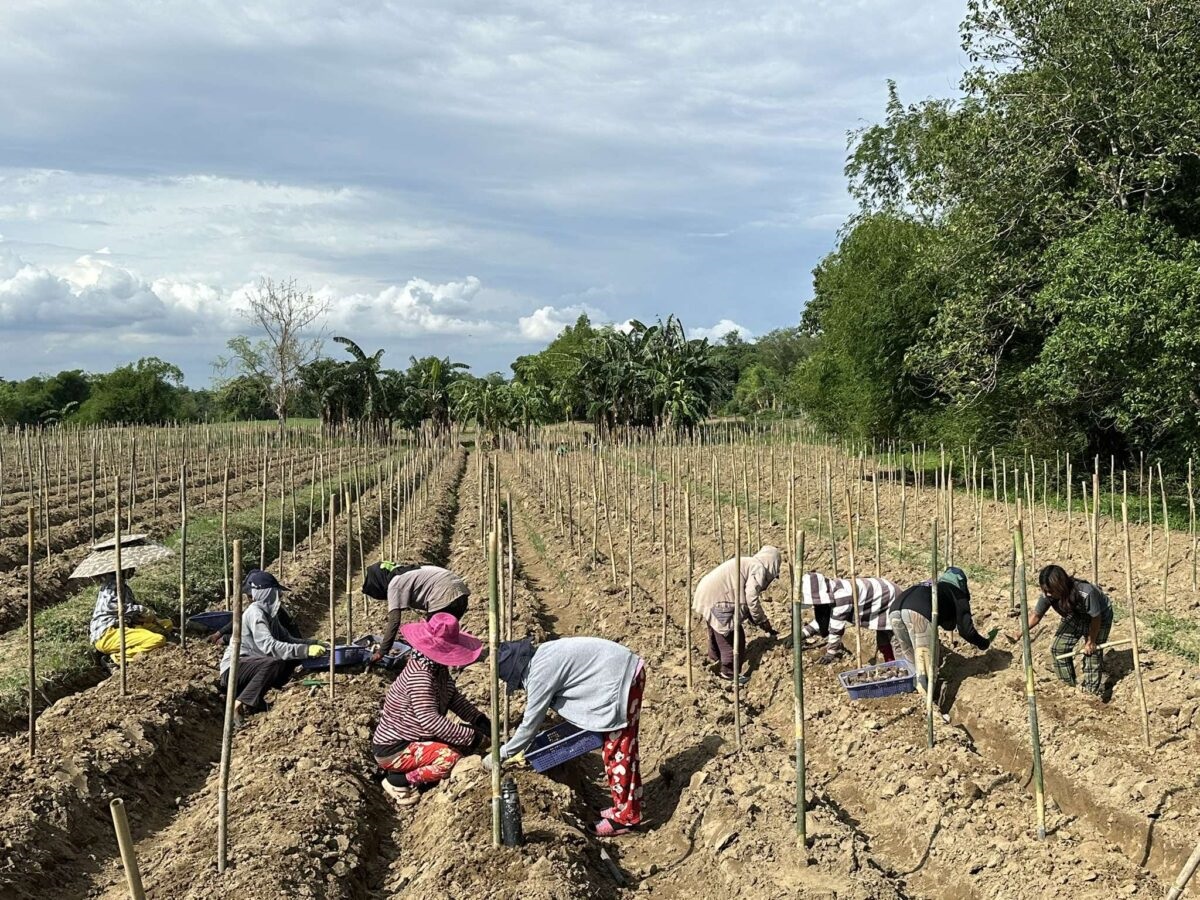
The purple yam is having a moment worldwide — but the country that gave it to the world is growing less of it every year
On café menus from Los Angeles to London, the vibrant violet hue of ube (scientific name: Dioscorea alata) has become one of food’s most recognizable colors. The Filipino purple yam now flavors lattes, ice creams, pastries and cocktails across North America, Europe and Asia, riding a social media-fueled craze that has turned a humble root crop into a global commodity.
Back home, the picture is far less rosy.
National ube production has steadily declined from more than 15,000 metric tons in 2021 to 12,483 metric tons in 2025, even as exports have reached record highs. The shortfall has grown severe enough that the Philippines has started importing ube from Vietnam to help meet domestic demand — a development that researchers describe as a striking reversal for a country long considered the cultural and agricultural heartland of the crop.
Grace Backian, director of the Northern Philippines Root Crops Research and Training Center, said the production decline is largely because there is no financial incentive for farmers to plant more. Ube takes between nine months and one year to grow, while other vegetables like potatoes can be sold for profit in less than three months.
“As of this time, it is the traders who really benefit if there are increases in the price of ube,” Backian told CNN. “Our farmers do not consider it a cash crop.”
The irony is stark. Exports of ube and ube-based products reached $3.06 million in 2025, with nearly 1.7 million kilograms shipped abroad, primarily to the United States. Yet the farmers who grow the crop see little of that wealth. Traders and middlemen typically capture larger margins from processing and exports, while many farmers continue operating with low farm-gate prices and limited bargaining power.
Farmers in remote areas also struggle to find buyers, so it is often easier for them to offload their harvests to middlemen, albeit at lower prices, than go to market themselves.
The structural problems go beyond economics. Farming remains fragmented, with smallholders dominating the sector. This structure constrains economies of scale and reduces the ability to standardize output. Access to quality planting materials is uneven, and many farmers face financial barriers when attempting to expand operations.
Production is further constrained by how ube is propagated. The crop grows faster from cut tubers than from seeds, forcing farmers to choose between selling their harvest and reserving portions for replanting.
Climate change compounds the challenge. Filipino farmers are struggling to keep pace as climate change makes weather patterns more unpredictable and limits the supply of quality planting material, according to the Philippine Root Crop Research and Training Center.
Meanwhile, Vietnam has positioned itself to scale up ube production rapidly, leveraging its tropical climate and established commercial base in crops like cassava and dragon fruit. Crucially, Vietnam invests in tissue culture and propagation centers, ensuring a steady supply of planting materials and avoiding the bottlenecks that plague Philippine farmers.
The budget situation at home is moving in the opposite direction. The Philippines’ 2026 agriculture budget was cut by 10%, with ube funding set to decline.
Researchers warn that the Philippines has seen this story before. The country was once Southeast Asia’s dominant rice producer but gradually lost ground to neighbors with stronger government support and more favorable geography, and now depends on rice imports. Vietnam and China are scaling up ube production through policy prioritization, biotechnology and export infrastructure, positioning themselves to capture a growing share of global demand.
As supply tightens, some manufacturers are reformulating products or limiting seasonal offerings to manage exposure to price volatility. Some international boba shops and industrial bakeries have begun substituting purple sweet potato — visually similar to ube but botanically distinct — to stabilize their supply chains.
Some researchers see a way out, but it requires a fundamental shift in how the industry is structured. Recommendations highlight how cooperatives, combined with planting material innovation and climate-resilient practices, can strengthen domestic supply chains, secure export markets and preserve the Philippines’ leadership.
Supply could become even more constrained as younger generations abandon agriculture, Backian added.
For now, the Philippines holds one advantage that cannot easily be replicated: maintaining a clear Philippine identity for ube products could become increasingly important as more countries expand production. Researchers argue that geographic labeling, cultural storytelling and stronger branding could command premium prices — but only if there is enough domestic product left to sell.
“To fully capture value, ube must be treated as a cultural export,” one analysis concluded.
The question is whether the country will act on that before the rest of the world grows its own.





Leave a Reply