

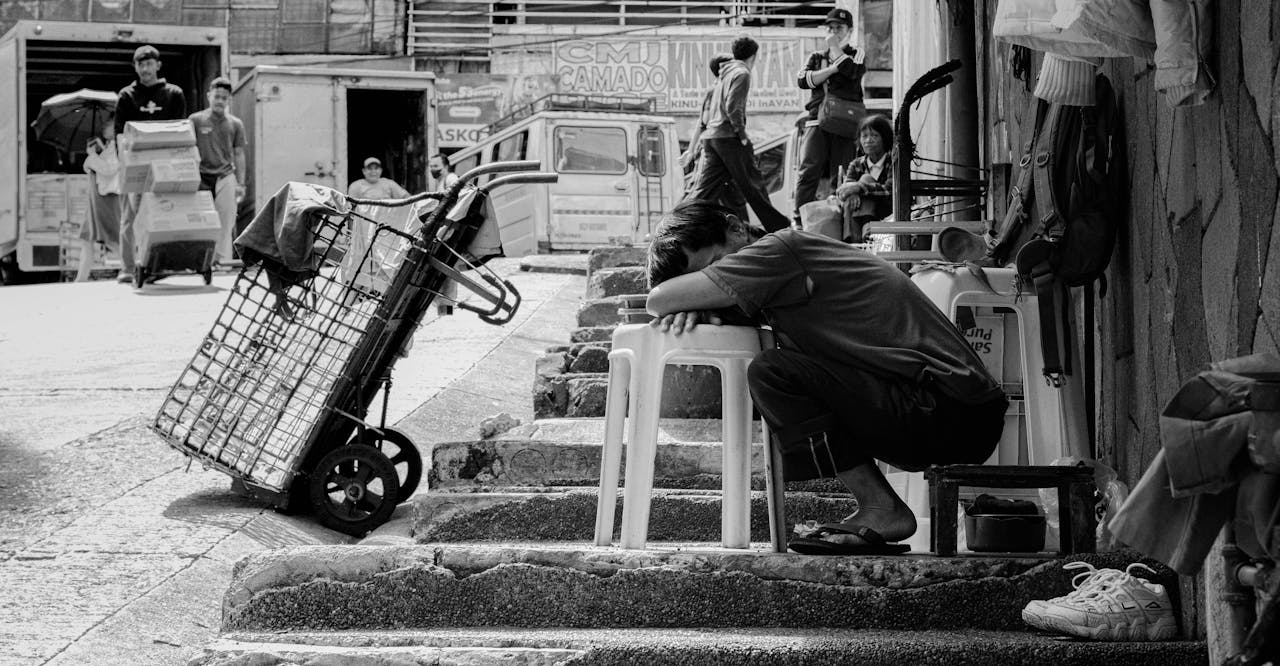
With 2.4 million Filipinos in the region and $6.5 billion in annual remittances on the line, analysts warn the conflict could unravel household economies across the archipelago
The escalating war in the Middle East is threatening a lifeline that sustains millions of Filipino households and the community institutions built around it, as more than a million overseas workers face mounting uncertainty and Philippine cooperatives brace for a potential collapse in the remittance income that drives their deposits and loans.
More than 1.1 million land-based overseas Filipino workers were deployed in the Middle East as of 2025, according to the Department of Migrant Workers. Of those, 1.072 million — or 96.4% — are concentrated in five countries geographically linked to the conflict: the United Arab Emirates, Saudi Arabia, Qatar, Kuwait, and Bahrain.
In 2025, OFWs in the region sent back roughly $6.48 billion in cash remittances — about 18% of total global remittances to the Philippines — according to Bangko Sentral ng Pilipinas data.
The human cost is already visible. A Filipino caregiver in Israel, Mary Ann Velasquez de Vera of Pangasinan, was killed March 1 when Iran launched a counterattack against U.S.-Israel strikes — the first Philippine casualty of the conflict, confirmed by President Ferdinand Marcos Jr. By early March, 1,189 OFWs had expressed intent to be repatriated, and 299 Filipinos arrived in Manila from Dubai on March 5, according to Philippine officials.
The economic ripple is what worries cooperatives and community lenders at home. Much of the remittance money that flows into provincial banks and credit cooperatives could slow or stop if the conflict widens. Data show 94.8% of Metro Manila households and 95.7% of households outside the capital use remittances primarily for food and household items. Cooperatives that extend credit against that income stream are exposed.
Analysts have urged cooperatives, faith communities and neighbors to organize pooled food resources, community transport arrangements and small mutual loans, noting that “local solidarity will matter in ways policy cannot fully replicate.”
BSP Governor Eli Remolona Jr. put the stakes plainly. “There’s some downside risk in terms of demand for our labor services,” Remolona said in a CNBC interview. “We’re a major exporter of labor services.”
The Philippine Chamber of Commerce and Industry warned that remittances — which hit a record $35.63 billion in 2025 — are a lifeline for millions of families and that any disruption could further dampen domestic consumption. It called on the DMW, the Department of Foreign Affairs and the Overseas Workers Welfare Administration to activate emergency protocols and fast-track repatriation plans if necessary.
Analysts caution the damage is not yet locked in. PIDS Senior Research Fellow John Paolo Rivera told BusinessMirror that historically, remittances have been resilient and that in periods of uncertainty, some OFWs even send more as precautionary support to families. He warned, however, that the key risk would be “prolonged economic slowdown or labor displacement in host countries.”
The Department of Trade and Industry launched an OFW Negosyo Fund program on March 12, providing P2 billion to help returning OFWs start businesses — a response the Philippine Star editorial board called a “welcome development,” though it cautioned the program would need more than capital to be viable.
Marcos said the government is closely monitoring the situation, warning it remains “volatile and difficult to predict.” He cited DMW Secretary Hans Leo Cacdac as estimating that 80 to 85% of Filipino workers in Gulf countries continue to work despite the conflict.
For cooperatives and OFW families alike, that margin offers little comfort as long as the guns keep firing.
Sources: Department of Migrant Workers, Bangko Sentral ng Pilipinas, Department of Foreign Affairs, Philippine Chamber of Commerce and Industry, Inquirer.net, Philstar, BusinessMirror, BusinessWorld, GMA News, Asia News Network





Leave a Reply